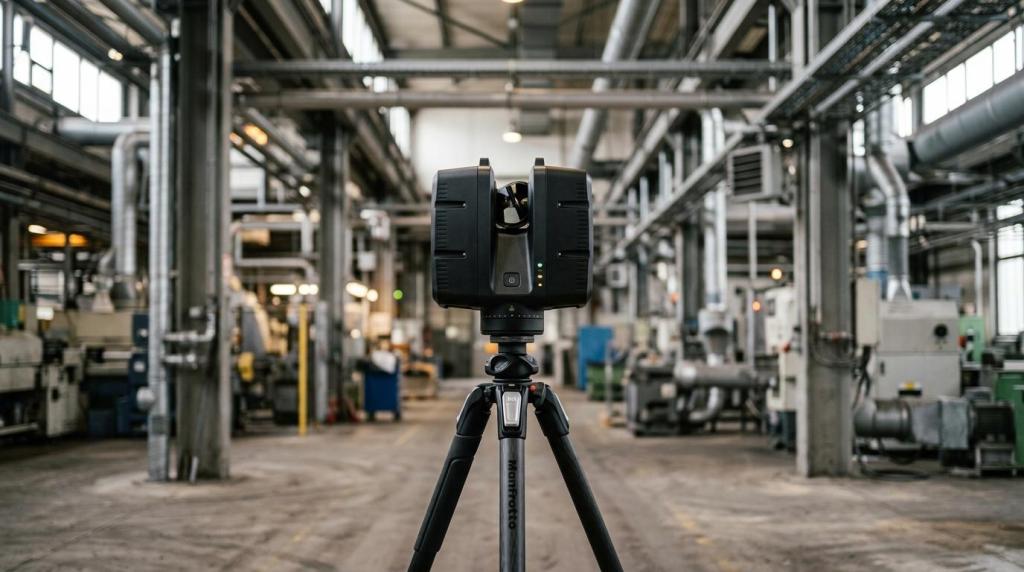
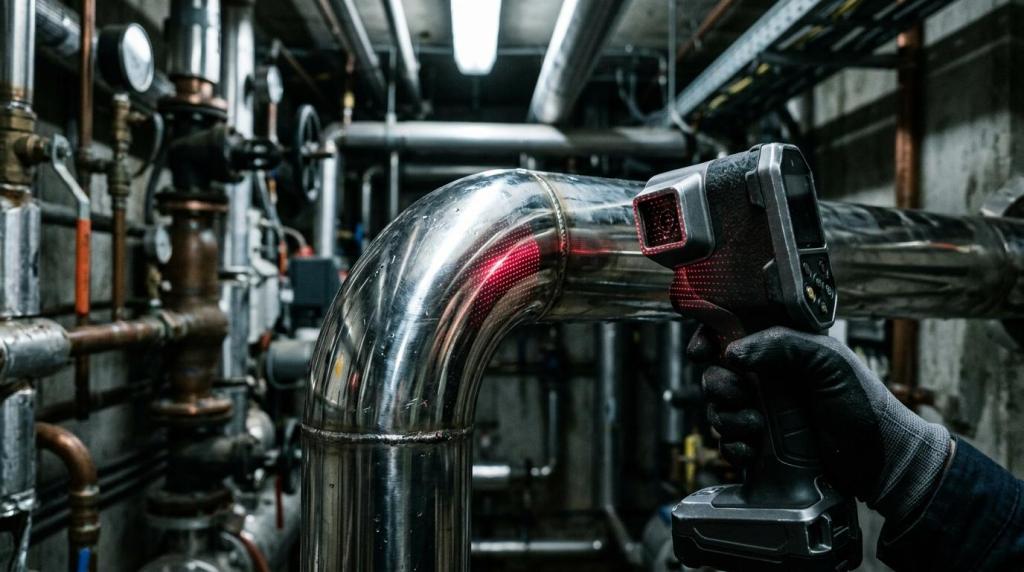
Reverse engineering is an advanced technique for digitizing physical objects accurately with 3D scanning. Specialized 3D scanners capture the surface of the object and produce a digital point cloud that represents its shape and dimensions. This data is then imported into CAD software and turned into a functional 3D model that can be edited, analyzed and optimized further. Reverse engineering is essential for modernizing older equipment, manufacturing spare parts and improving existing designs – especially where the original technical documentation is missing.
Combining scanning with CAD remodeling (scan to CAD) makes it possible to digitize virtually any shape with high accuracy, including complex geometry. With 3D scanners we can capture irregular objects and intricate surfaces that would be hard to reconstruct by other methods. We then process the scans in software, where the design can be optimized and improved. Reverse engineering saves both time and money, above all where you need exact replicas of existing parts or want to take them a step further.
Reverse engineering software we work with
We use several advanced software tools that enable precise modeling based on scan data
- Geomagic Design X: converts 3D scans directly into CAD models, including complex geometry.
- Geomagic for SOLIDWORKS: brings scan data straight into SOLIDWORKS for easy remodeling.
- Geomagic Wrap: turns scan data into polygon meshes and surface models.
- Mesh2Surface for SOLIDWORKS: lets you build CAD models from scan data directly in SOLIDWORKS.
- QuickSurface: fast, easy-to-use software for reconstructing surface models.


Types of 3D scanners used in reverse engineering
Reverse engineering relies on different kinds of 3D scanners, depending on the type of object and the accuracy required:
- Laser scanners: suited to detailed, complex surfaces. A laser beam maps the surface of the object with high accuracy.
- Optical scanners: project light patterns to measure the object and generate 3D data. They are fast and efficient for scanning larger objects.
- CT scanners: use X-rays to create 3D models of complex objects with intricate internal structures.

Reverse engineering applications
Reverse engineering is used across a wide range of industries and applications, including:
- Automotive: digitizing old parts that are no longer available, optimizing components for better performance, or the very popular campervan conversions for vans of all types and sizes
- Aerospace: reconstructing components exposed to wear or upgrading existing parts.
- Healthcare: creating accurate models for implants or prosthetics based on scans of parts of the human body
- Spare parts manufacturing: rapid production of parts for machines or equipment that are no longer available on the market.
Step by step: how does reverse engineering work?
- Scanning the object: the physical object is scanned with a 3D scanner (laser, optical or CT), producing a point cloud or polygon mesh. This takes tens of minutes for smaller parts, but can take hours if the part is more than a few meters long
- Cleaning and preparing the data: unwanted artifacts are removed from the scan data and it is prepared for further processing
- Remodeling: the data is imported into software such as Geomagic Design X or Mesh2Surface for SOLIDWORKS and converted into a CAD model. This step involves creating geometry, surfaces and solid models. Modeling can be quite time-consuming
- Exporting the CAD model: the finished CAD model is exported to a format that can be used for manufacturing, analysis or simulation.
Why scan parts and convert them into CAD data?
Reverse engineering offers many benefits.
- Modernization and modifications: older parts can be modernized or existing designs improved based on the scan data.
- Fast spare parts production: scanning and modeling let you quickly create exact replicas of parts that are otherwise unavailable.
- Lower costs: shorter development time and no need to redraw designs by hand save companies money.
- Higher accuracy: 3D scanning captures even the smallest details, which makes the resulting model more accurate.

No scanner, no software, no time to model the parts?
If you need to digitize older parts, produce replacement components or optimize designs, our team of reverse engineering specialists is ready to help. We work with advanced software such as Geomagic Design X, Geomagic Wrap, Mesh2Surface for SOLIDWORKS and QuickSurface to deliver accurate, high-quality digital models. Contact us for more information and a tailored quote!