Today, building owners and facility managers have to deal with more than whether a building stands and works. More and more often, they need to prove that up-to-date building documentation, records of building services and the paperwork for safe operation actually exist. In older buildings, this is exactly where the weak spot shows: the drawings do not match reality, inspection reports are scattered and some equipment has no accompanying documentation at all.
Building documentation is therefore a practical tool, not an administrative burden. It helps bring order to construction records and to meet the obligations that Czech Act No. 250/2021 Coll. introduces for reserved technical equipment. Alongside it, building law must also be followed, because that is what governs the retention of building documentation and the building passport as substitute documentation when the original records are missing.
What building documentation is and how it relates to Czech Act No. 250/2021 Coll.
Documenting a building means establishing and recording its actual condition. The output is usually a building passport (a substitute as-built record), a set of drawings, a schedule of structures, rooms, areas and building services, and often a digital model or point cloud as well. The purpose is to have a reliable basis for facility management, renovations, inspections, insurance and day-to-day operation.
It is worth separating two legal levels. The building passport itself is rooted in building law, that is, in the rules for retaining building documentation. Act No. 250/2021 Coll. deals with the operational safety of reserved technical equipment (VTZ). In practice, however, the two areas meet every day, because without up-to-date building documentation it is very hard to show where the equipment is, how it has been modified and how it is to be operated safely.
That is why documenting the building is often the first step towards getting the electrical, pressure, gas and lifting equipment in the building in order as well.
| Area | What it covers | Who is typically responsible | What you need to have |
|---|---|---|---|
| Building documentation | Actual condition of the building, drawings, changes, records | Building owner | Approved documentation, as-built documentation or a building passport |
| Operation of VTZ under Act No. 250/2021 Coll. | Safe operation of reserved technical equipment | Operator, or the tenant after handover | Accompanying and operating documentation, inspections, tests, local rules, maintenance records |
| Building management in practice | Overview of building services, rooms, distribution systems and changes | Owner, property manager, facility management | Up-to-date building documentation, technical records, document archive, inspection schedule |
Who Czech Act No. 250/2021 Coll. applies to in building operation
Act No. 250/2021 Coll. applies to legal entities and self-employed individuals who operate reserved technical equipment. In everyday practice, this affects managers of commercial buildings, office buildings, production sites, schools, hospitals, hotels, shopping centers and residential buildings, if their operation is handled by a legal entity or a business.
What matters is that the operation does not have to be technologically complex. The obligations arise as soon as the building contains even a single piece of equipment that falls under the VTZ regime. At that point, a general technical overview of the building is no longer enough. You need clearly traceable documentation, responsibilities and inspection dates.
This group commonly includes:
- electrical installations and switchboards
- lightning protection systems
- backup power sources and UPS units
- boiler rooms and pressure vessels
- compressors
- gas distribution and gas appliances
- lifts, platforms and escalators
In leased buildings, the contractual and operational handover of equipment also needs watching. Under Section 20(6), responsibility for the proper use and operation of the equipment can pass to the tenant from the date the equipment is demonstrably handed over, if the operator is not the owner. In practice, this means just one thing: it must be clear who actually operates the equipment, who holds the documentation and who orders the inspections.
Which documents a building owner or operator must have
Building law requires the owner to keep, for the entire lifetime of the building, the approved design documentation, the construction documentation, the as-built documentation or the building passport, and other important records relating to the building. These records can also be kept electronically, which is very practical when managing larger building portfolios.
In addition, Act No. 250/2021 Coll. and the related requirements for operating VTZ call for accompanying and operating documentation for each piece of equipment. If the accompanying documentation is missing, the scope of inspections and safe operation must be set out in a local operating safety regulation (MPBP). If both are missing, the inspection technician must not approve the equipment as safe for operation.
Well-kept documentation should cover at least the following areas:
- Building documentation: design, as-built documentation, building passport, records of changes and renovations
- Accompanying VTZ documentation: installation, operating and maintenance instructions and technical specifications in Czech
- Operating documentation: inspection reports, tests, local operating rules, logbooks and repair records
- Personnel records: operator qualifications, training, appointment of responsible persons
- Inspection plan: schedule of upcoming inspections, periodic tests and service visits
When these records sit in paper binders in several different places, it creates unnecessary risk. It is far safer to carry out a documentation audit, standardize equipment names, assign each item to a specific space and create a digital archive linked to the building passport.
When a building passport is required instead of missing documentation
With older buildings, the problem is often simple: the documentation has not survived, is incomplete or no longer matches the actual condition after years of alterations. For this situation, building law provides for a building passport as substitute documentation. This is particularly important for buildings that have gone through partial alterations without the drawings being systematically updated.
According to the interpretation of the Czech Ministry of Regional Development, when a building authority finds shortcomings, it usually first notifies the owner and asks them to complete the documentation or to have a building passport prepared. A fine is therefore not automatically the first step. That is good news, but only for those who actually start addressing the situation.
If the documentation was never produced, has not survived or is not in proper condition and the building was permitted, the owner is obliged to have a building passport prepared. If they fail to do so, the building authority can order it directly. With the growing digitalization of public administration and the register of buildings and projects linked to the building identification number, the pressure for building data to be traceable and in order is increasing too.
How 3D building scanning speeds up building documentation
Traditional surveying with a tape measure and manual redrawing often no longer makes economic sense for larger buildings. It is slow and the risk of errors is needlessly high. Modern building documentation therefore relies on 3D building scanning, which captures the actual condition quickly, accurately and in great detail.
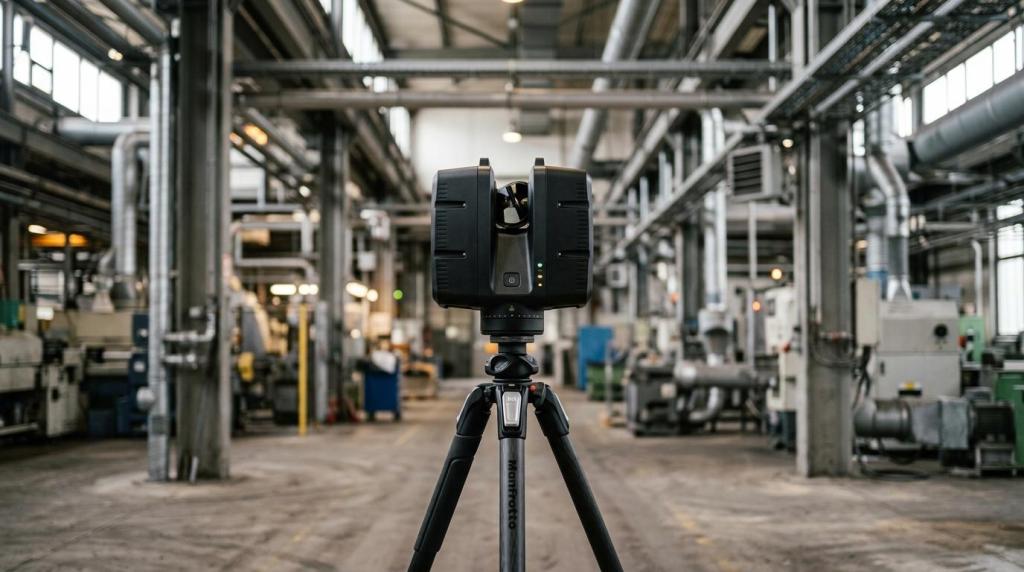
SLAM LiDAR scanners have proven very effective, allowing fast data capture even in complex interiors, plant rooms and buildings in operation. The measured data produces a point cloud, from which floor plans, sections, elevations and input for a BIM or CAD model can be prepared. For construction practice, information from the manufacturer FJD Trion, whose solutions are used precisely for documenting buildings and infrastructure, is also of interest.
This is valuable especially where the building fabric needs to be linked to building services. A single data capture can serve the room schedule, checking distribution routes, surveying plant rooms and preparing input for a renovation. Related topics on CAD, BIM and working with point clouds can also be followed on Techcad.cz, where this subject comes up in connection with the digitalization of design and technical data management.
The benefit is not just a faster survey. Equally important is being able to return to the digital model at any time and look up a specific detail without another site visit.
What penalties and operational impacts outdated documentation can bring
Outdated or missing documentation is not just a problem during an inspection. It very quickly turns into an operational risk. The inspection technician may not confirm that the equipment is safe to operate, the service company has nothing to work from, and after an incident it is difficult to show how the building was managed and who was responsible for what.
On the building law side, the owner must keep the building documentation in order for as long as the building exists. If it is missing, the authority usually calls for a remedy. If no remedy follows, it can impose measures and, in administrative offence proceedings, a fine. For breaches of the building owner's duties under Section 167, which include keeping the building documentation, Section 302 of the Czech Building Act No. 283/2021 Coll. allows a fine of up to CZK 400,000. The amount is assessed according to the seriousness of the breach and other circumstances.
With VTZ, there is an even more serious impact on top of financial penalties: the equipment may not be recognized as safe for operation. That can mean shutting down part of the building, restrictions on leasing, problems with the insurer and strong pressure for immediate remedy.
Typical consequences include:
- inability to demonstrate safe operation of equipment
- a failed inspection or a conditional opinion
- an order to complete the documentation or the building passport
- administrative penalties
- equipment shutdown until defects are remedied
A practical approach to building documentation and a VTZ audit
The best results come from an approach that brings building documentation, operating records and inspection documents together into a single project. The aim is not to create yet another folder of documents, but to get a system by which the building can really be managed.

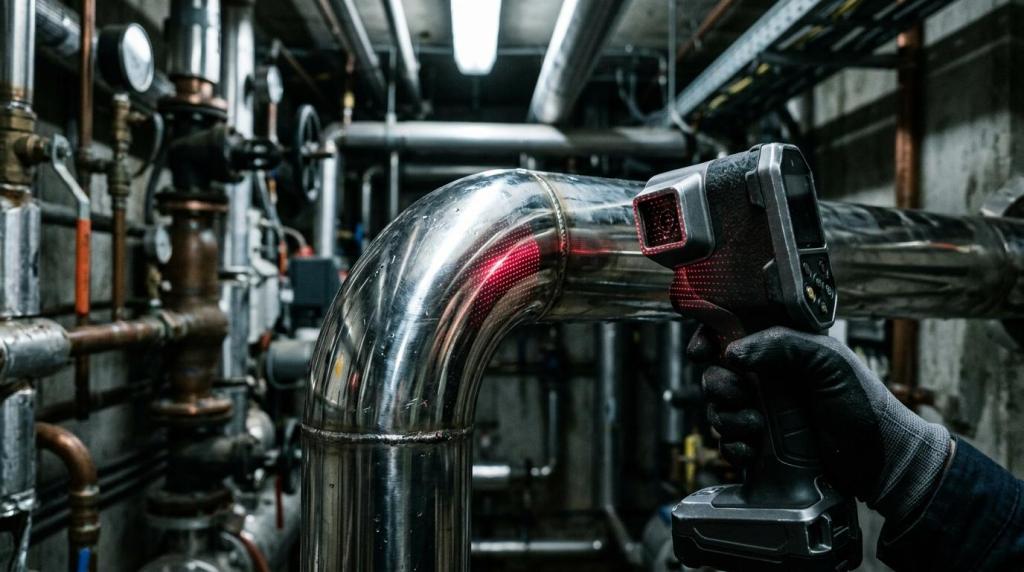
The usual starting point is comparing what is in the archive with what is in the building. Only then does it become clear where drawings are missing, which building services lack accompanying documentation and which changes were never reflected in the as-built documentation.
A proven approach looks like this:
- Appoint a person responsible for equipment operation and documentation management.
- Document the building and audit the available records.
- Track down the accompanying documentation for the VTZ or have an MPBP prepared.
- Arrange inspections and tests by qualified persons holding a valid authorization from the Technical Inspection Authority of the Czech Republic (TIČR).
- Remedy any defects found without undue delay.
- Archive the documentation in a clear electronic form that is also accessible for day-to-day operation.
For larger buildings, it pays to link building documentation to the management of rooms, leases, energy and maintenance plans. The result is a basis that serves renovations, alterations, inspection bodies and everyday facility management. And that is the main value of well-executed building documentation: a legal obligation becomes a useful tool for managing the building.
Free download: Guide to the Czech BIM Act No. 330/2025 Coll. for construction companies — what applies from 1 January 2027, who mandatory BIM affects and how to prepare.